Designing a canvas where the AI watches you think for K-12
Designing a canvas where the AI watches you think for K-12
b2c && edtech && ai && 2025
I designed the core canvas experience, the stylus-first smart surface where K-12 students solve questions naturally while AI reads their handwriting in real-time and delivers contextual feedback.
🧑🏻
Ashutosh · Product Designer
👨🏻🦱
Product Manager
👨🏿🦱
Developer
👩🏼🦰
Developer
🧑🏽🦱
Developer
🧑🏻🦲
AI/ML Engineer
👩🏽
UX Researcher
1 Product Designer · 1 PM · 3 Dev · 1 AI/ML · 1 UX ResearcherLed end-to-end UX, user journeys, information architecture, and interaction design
Students outsource thinking to AI, retain nothing, and move on. Teachers grade work that was never truly done.
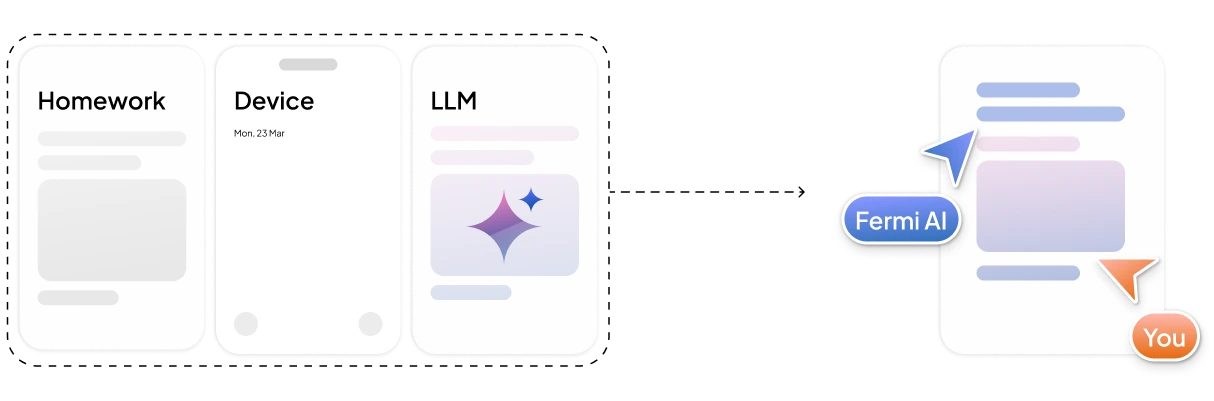
One surface for writing, thinking, and AI feedback. No switching.
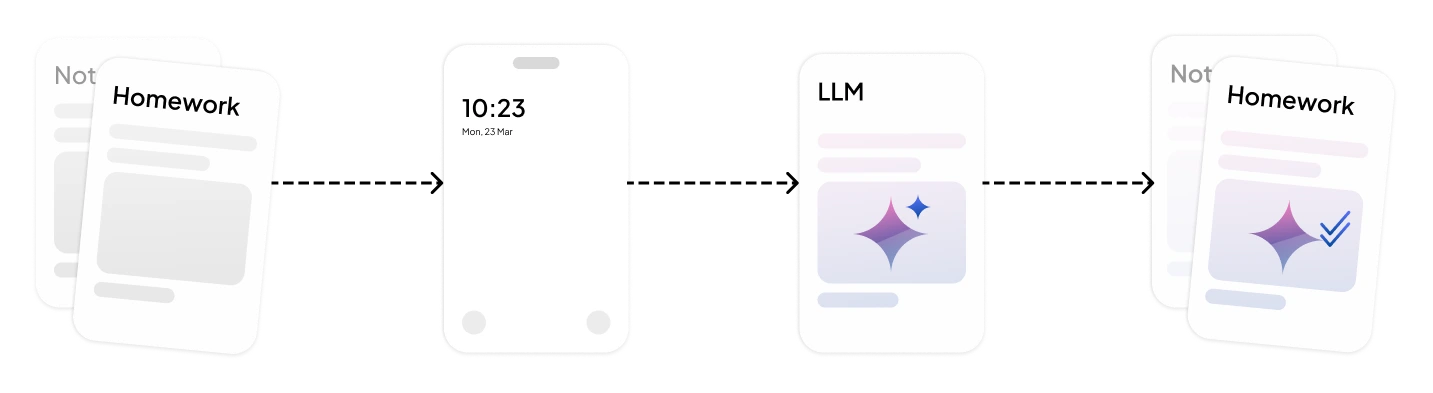
Instead of another homework chatbot, we put the AI inside the writing surface. Students write with a stylus, the AI reads strokes live, and feedback shows up where the mistake is.
79 students validated the idea. The layout broke the experience.
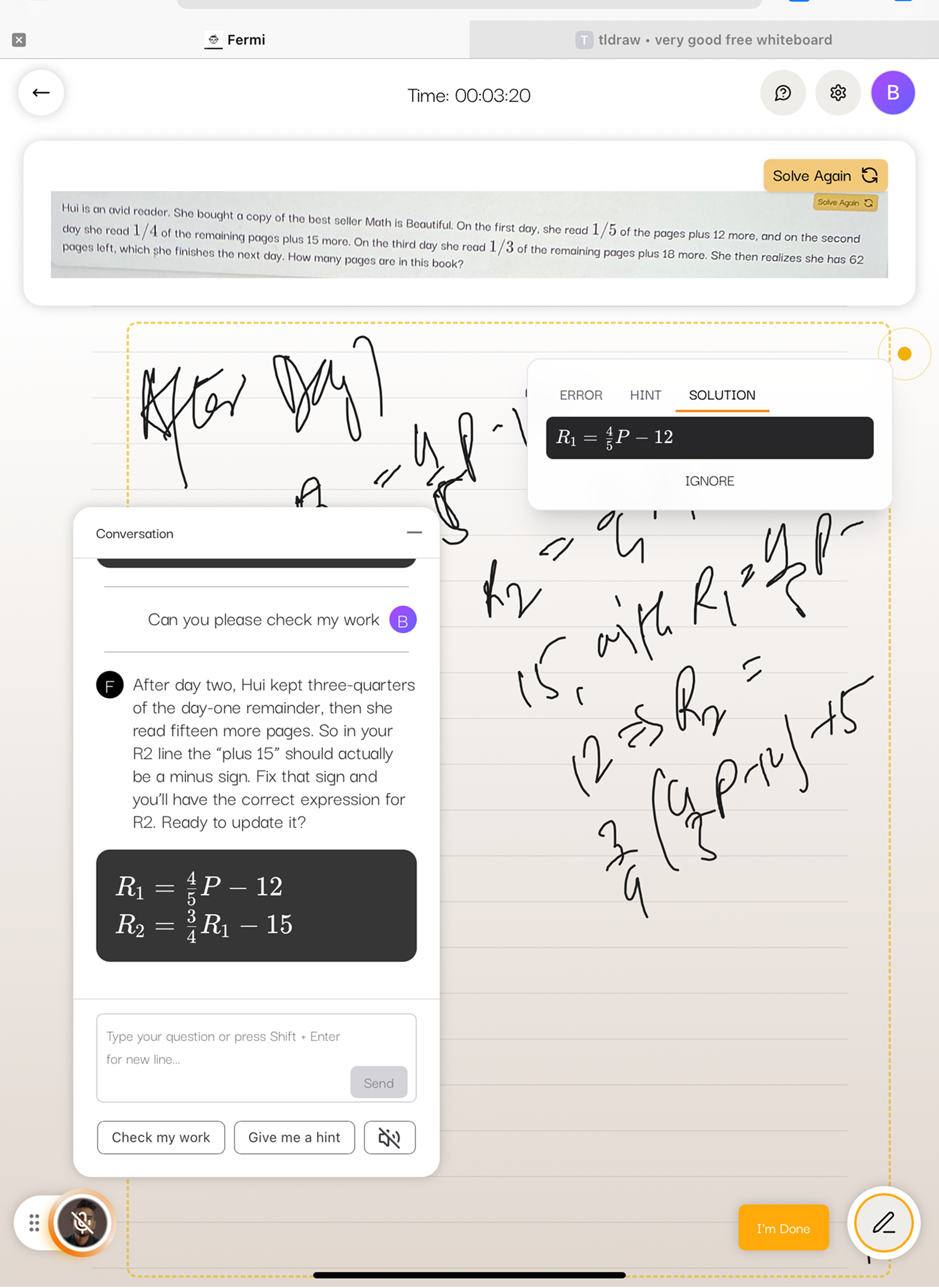
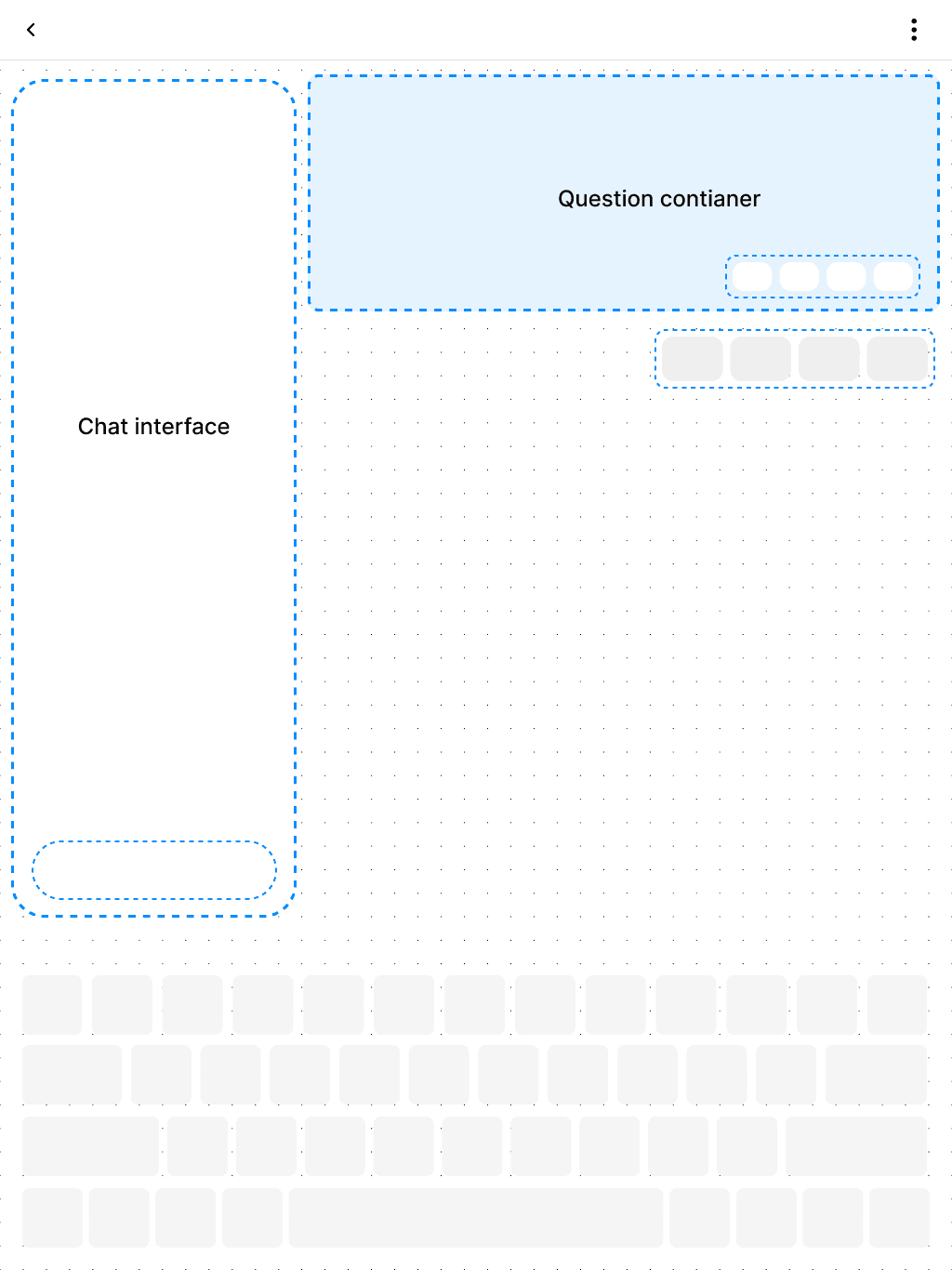
No protected minimum writing area. Fixed panels and buttons eat into the canvas on iPad Mini
Controls placed exactly where palms rest during stylus writing, causing accidental taps
AI feedback renders at screen bottom, spatially disconnected from the student's work area
Tutor board hidden behind a toggle with no contextual link to the canvas
Fixed question container doesn't adapt to MCQs, MSQs, or long-text question types
Long questions cover the canvas entirely with no collapse or scroll
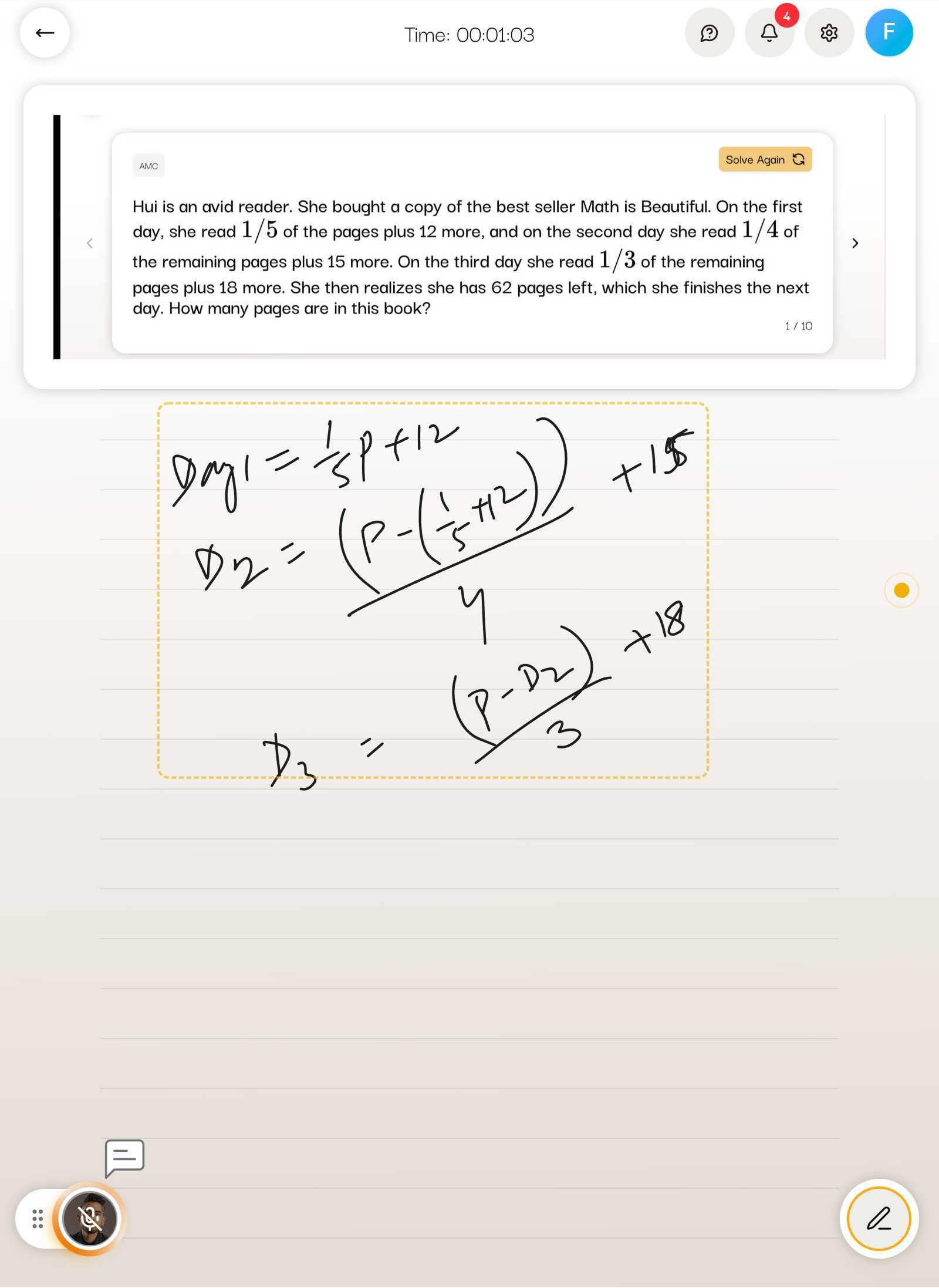
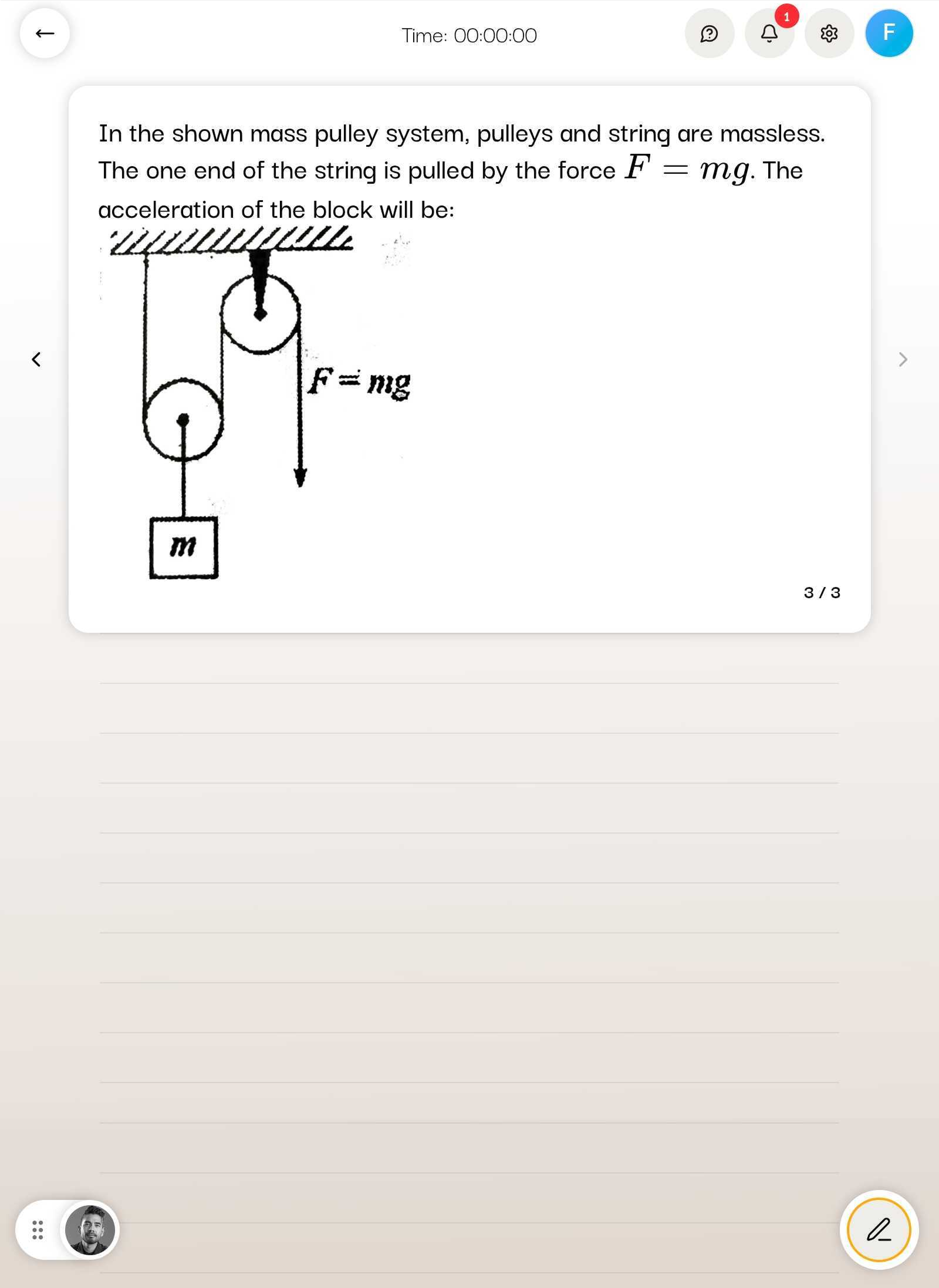
Fermi AI: Smart Canvas MVP
One beta user quoted
“No one has ever done this before. You guys are onto something.”
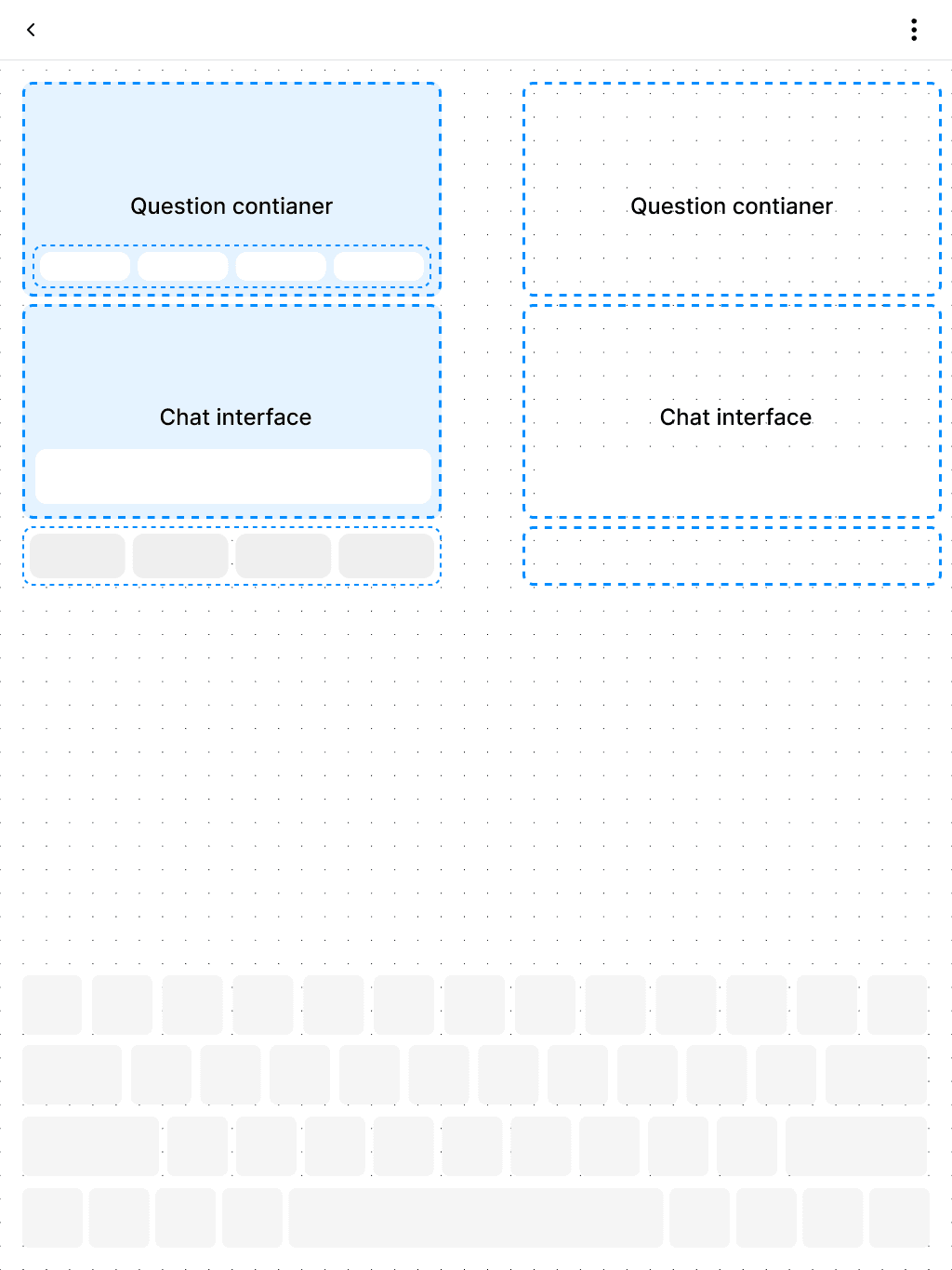
Simplest mental model for younger students (read, ask, write)
Cons
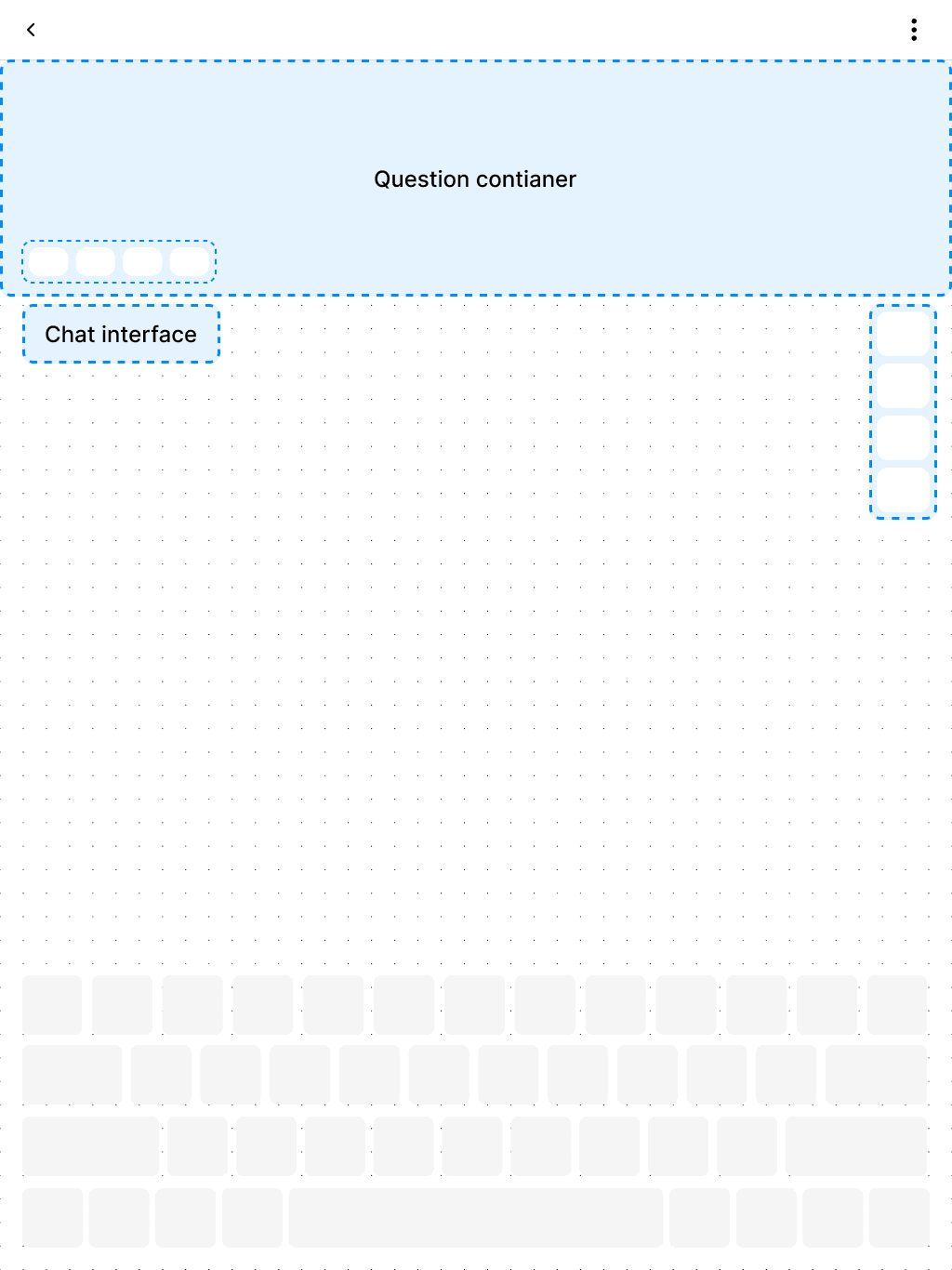
Two stacked panels push canvas start ~30% down, less room for multi-step work
Tall question images compound with chat height, leaving almost no canvas when keyboard is active
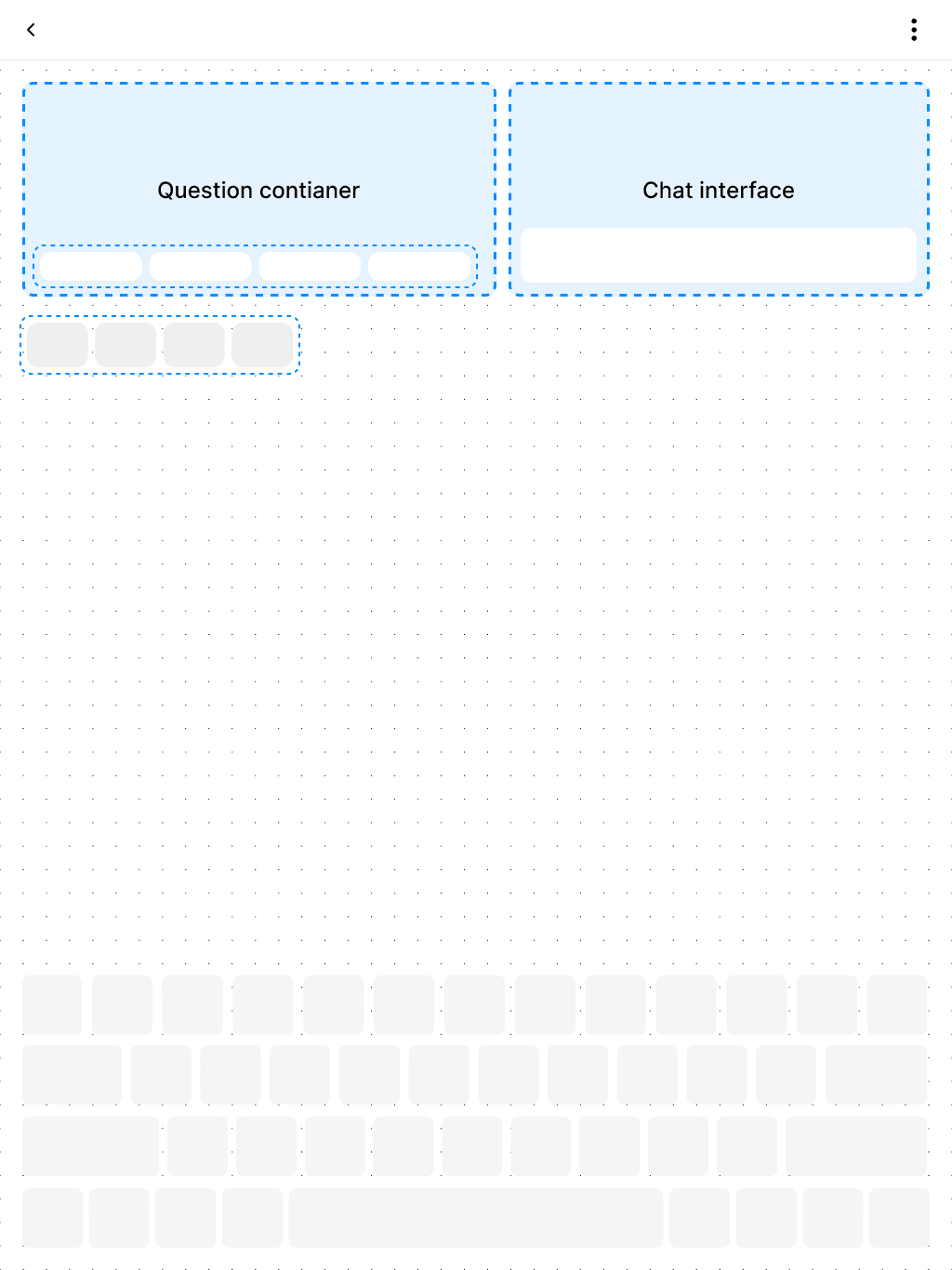
Portrait over landscape. Parsing, writing, and notebooks all flow top to bottom.
“
Given handwriting-first input and unpredictable question formats, portrait was the more forgiving orientation. It gave students more room to think without fighting the layout.
Portrait+7 lines
Q 1 / 3physics
A block of mass 2 kg is placed on a rough inclined plane at 30° to the horizontal. The coefficient of friction is 0.3. Find the acceleration.
diagram
Known: m=2kg, θ=30°, μ=0.3
F = mg sinθ − μmg cosθ
F = mg(sinθ − μcosθ)
= 2(9.8)(sin30 − 0.3·cos30)
= 19.6 × (0.5 − 0.26)
= 19.6 × 0.24 = 4.7 N
a = F/m = 4.7 / 2
a = 2.35 m/s² ✓
Part b: v² = u² + 2as
v² = 0 + 2(2.35)(3)
24 lines
Landscape
Q 1 / 3physics
A block of mass 2 kg is placed on a rough inclined plane at 30° to the horizontal. The coefficient of friction is 0.3. Find the acceleration.
diagram
Known: m=2kg, θ=30°, μ=0.3
F = mg sinθ − μmg cosθ
F = mg(sinθ − μcosθ)
= 2(9.8)(sin30 − 0.3·cos30)
= 19.6 × (0.5 − 0.26)
= 19.6 × 0.24 = 4.7 N
a = F/m = 4.7 / 2
a = 2.35 m/s² ✓
Part b: v² = u² + 2as
v² = 0 + 2(2.35)(3)
17 lines
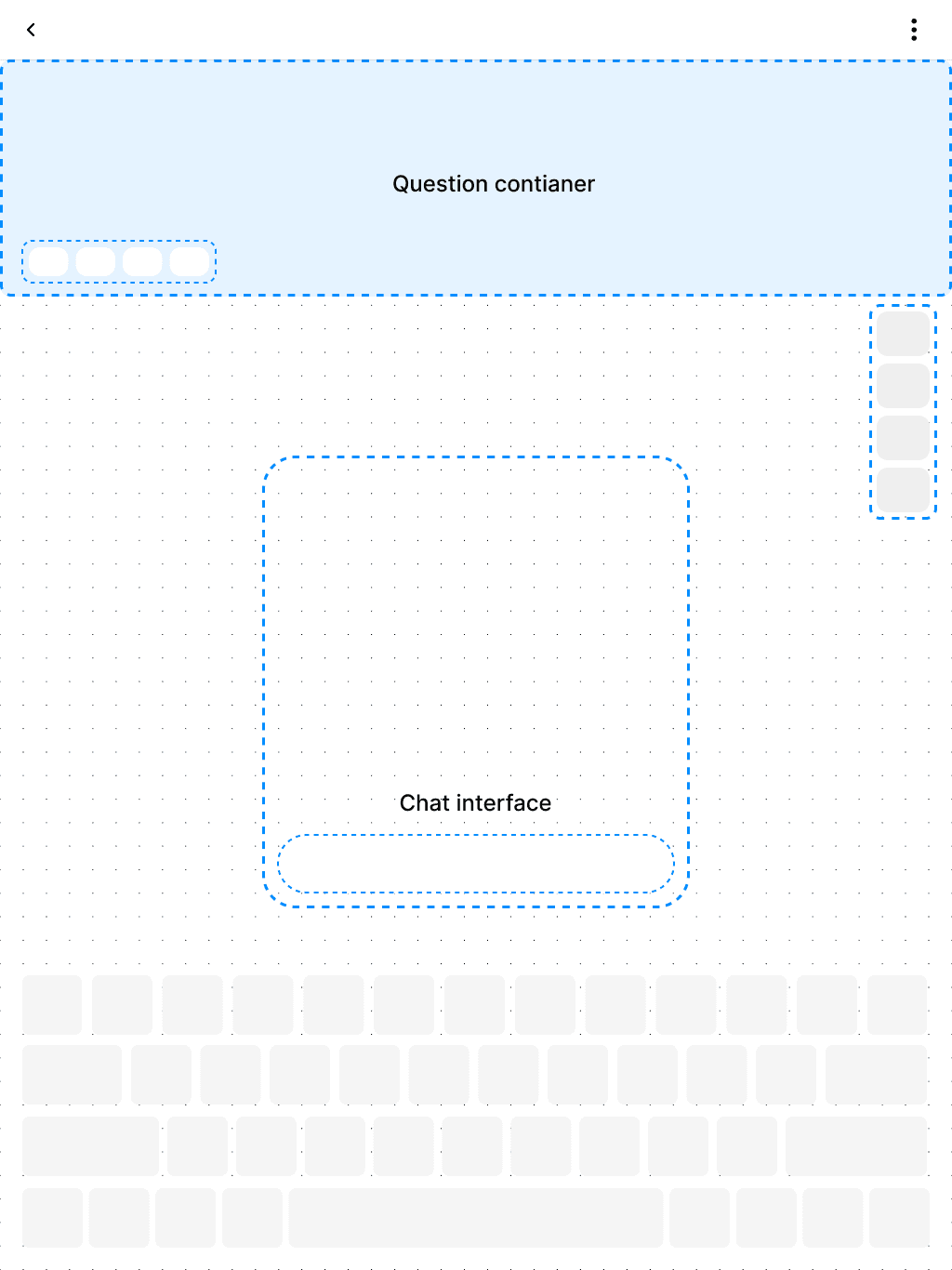
Students decide how much question they need to see. Not the layout.
Collapsed, expanded, and scrollable states that maximize writing space.
A car is travelling along a straight road. At time t=0, the car passes through a point O with velocity 12m/s. The acceleration of the car at time t seconds is given by a=6−2tm/s2 for 0≤t≤6.
(a) Find the velocity v of the car at time t.
(b) Find the maximum velocity of the car and the time at which it occurs.
(c) Find the displacement of the car from O when t=6.
If f(x)=3x2−2x+1, what is the value of f(2)?
Find the area under the curve y=2x+3 from x=1 to x=4.
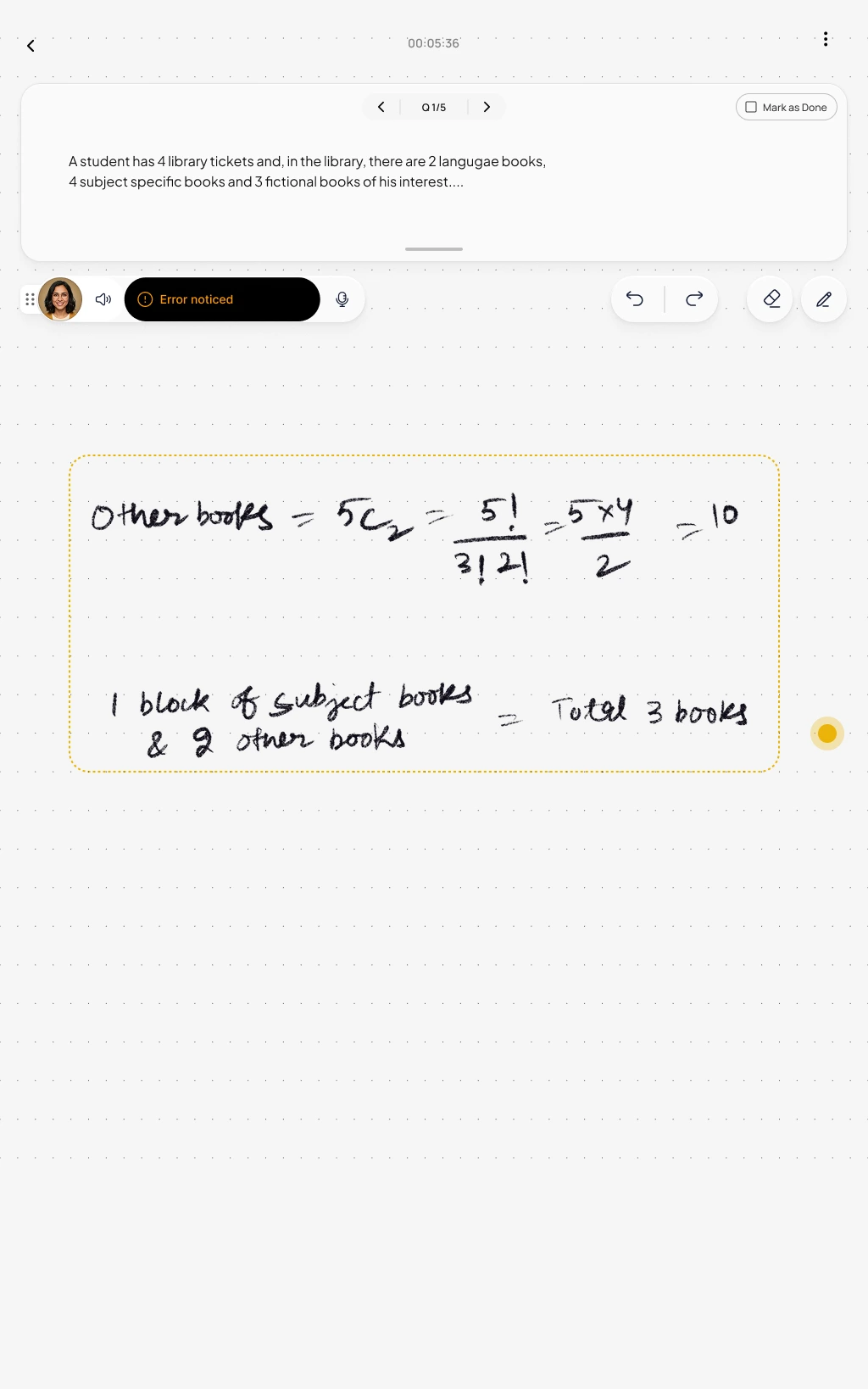
Designing the AI chat interaction for the smart canvas.
MVP chat interface designs
Input/output controls unclear
Hidden multi-layer actions
Voice persona mismatch
Speaker vs mic confusion
Direct action buttons
Avatar-voice persona match
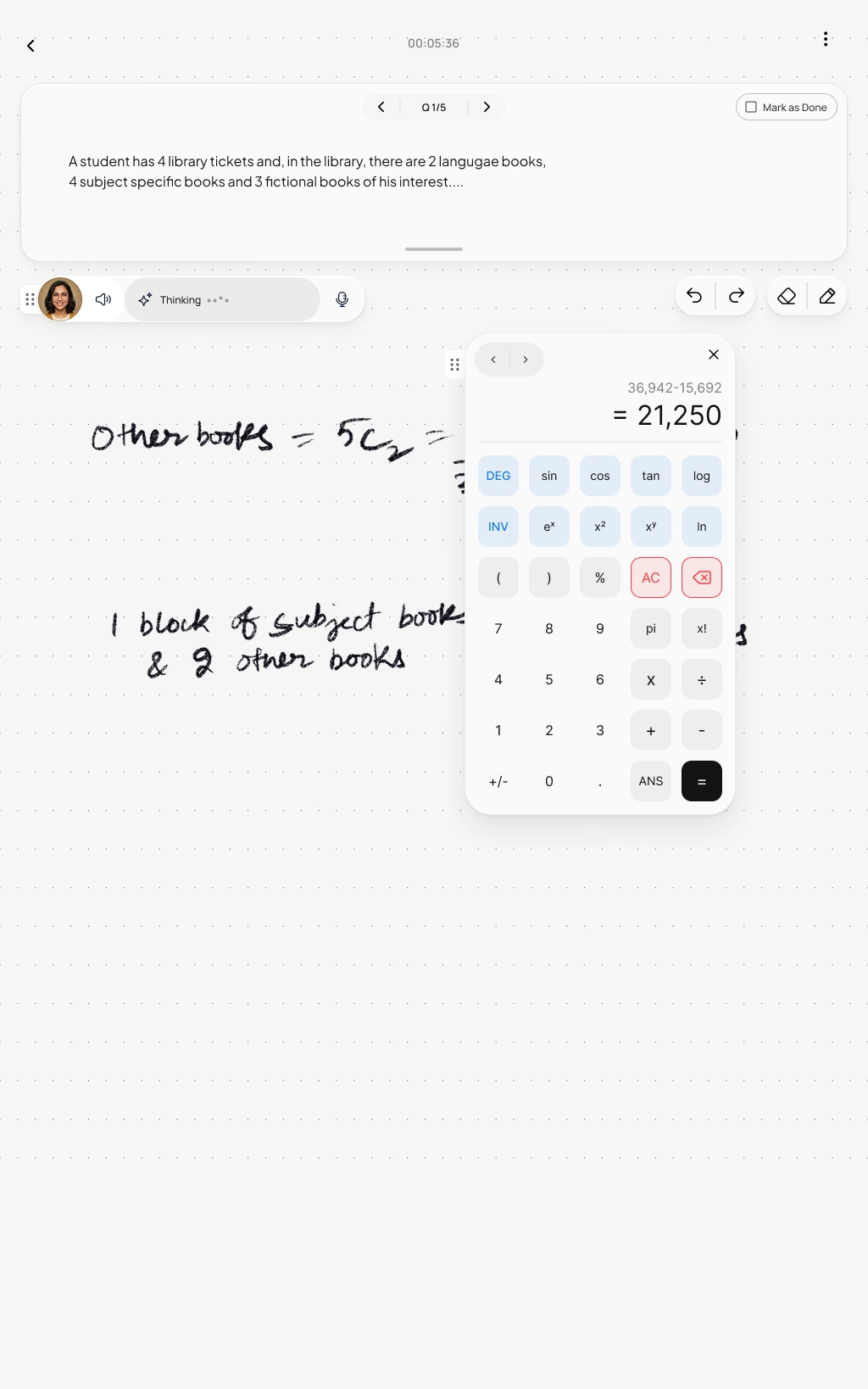
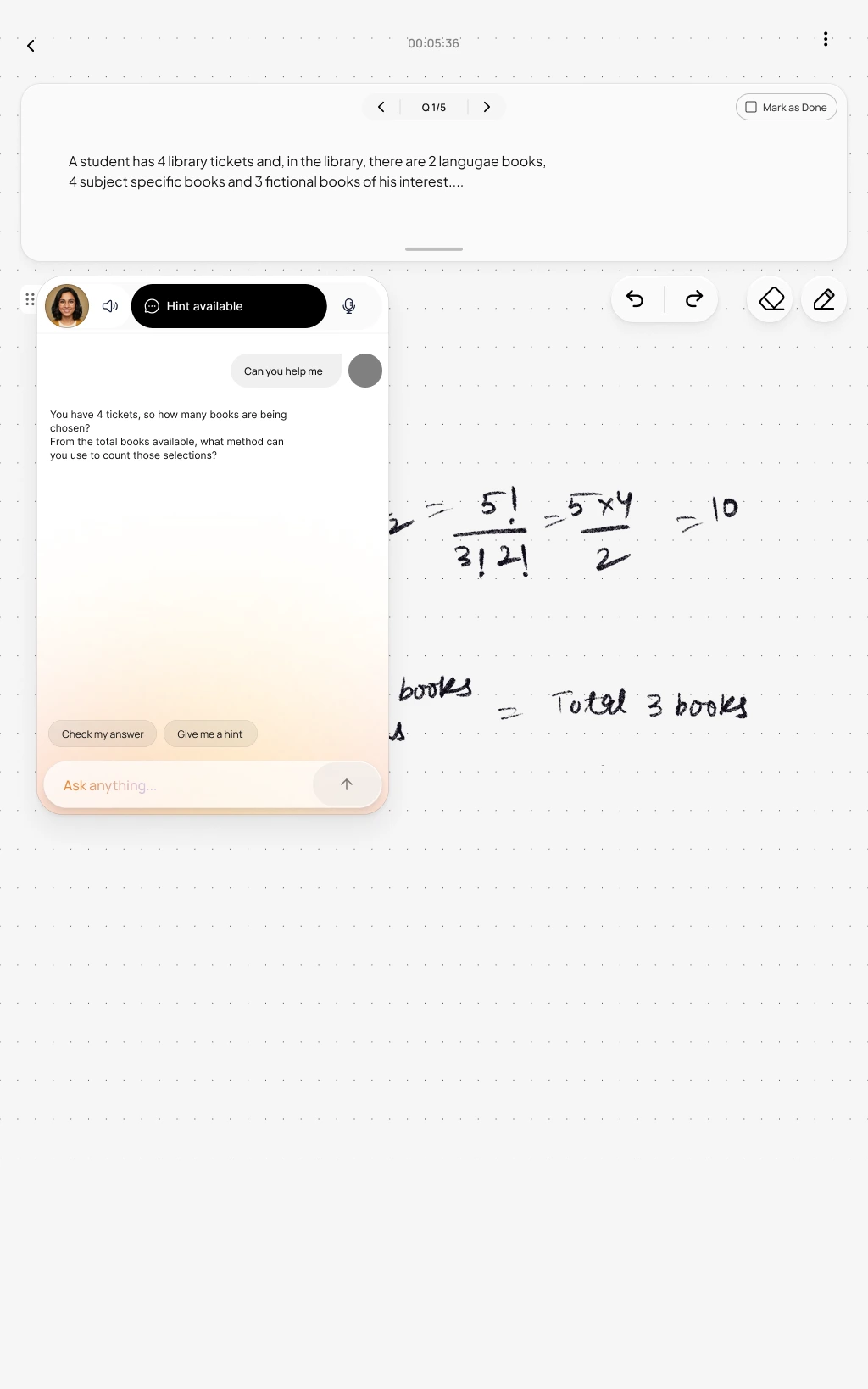
Final design of AI chat integration
Chat
Hint available
A car is travelling along a straight road. At time t=0, the car passes through a point O with velocity 12m/s. The acceleration of the car at time t seconds is given by a=6−2tm/s2 for 0≤t≤6.
(a) Find the velocity v of the car at time t.
(b) Find the maximum velocity of the car and the time at which it occurs.
(c) Find the displacement of the car from O when t=6.
(d) Determine the total distance travelled by the car in the interval 0≤t≤6.
Chat
Can you help me
What operation would reverse a derivative?
Check my answer
Give me a hint
Writing, thinking, and AI. One smart canvas.
Before
After
Slide to compare beta MVP and final canvas design
What students said after the redesign
“
Fixed question box, movable AI chat, more room to write. Can now see the tutor board while writing. Pen feels smoother. Still wants geometry and shape tools.
— Niharika · Class 12 · Dec 2025
“
Loved the floating-island AI conversation window. Movable, never blocks the writing area. Auto text conversion helps. Wants time-per-question metrics next.